FAQ & Resource Guides
Westside Nurseries is not just a garden centre, we’re a gardening partner who is here to help you get the most out of your gardening experience.
Plant Material Guarantee
All deciduous trees, shrubs, roses, and evergreens are guaranteed for one (1) growing season. Claims must be submitted by November 30th of the purchase year and will be replaced once, free of charge, in the event of plant death, with the exception of damage caused by animals or neglect.
BOTH plant and receipt must be returned.
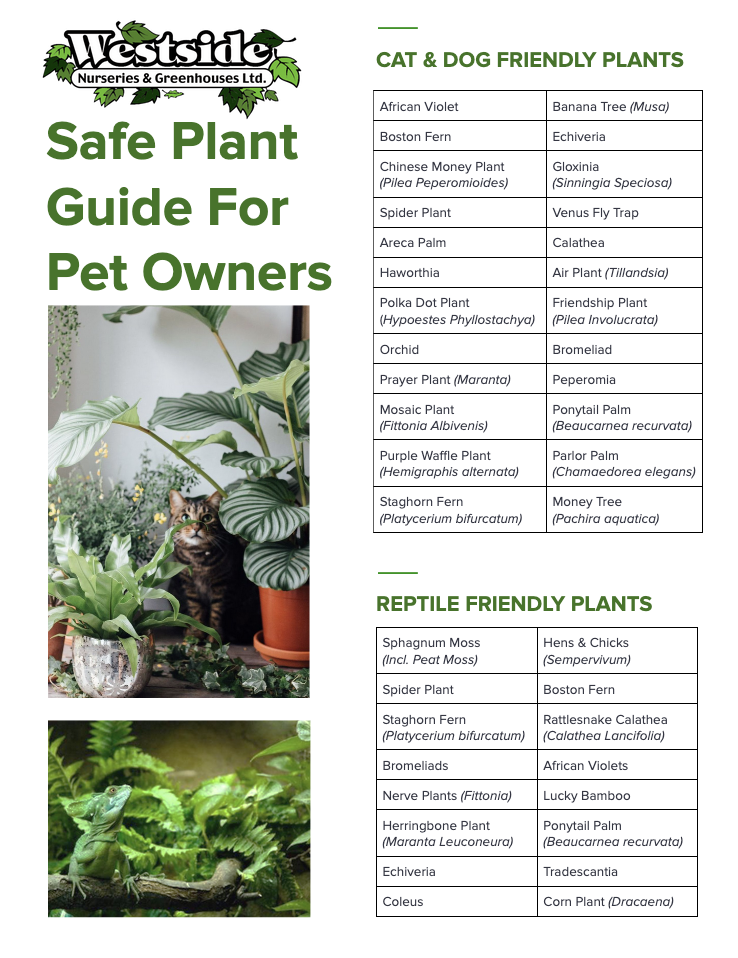
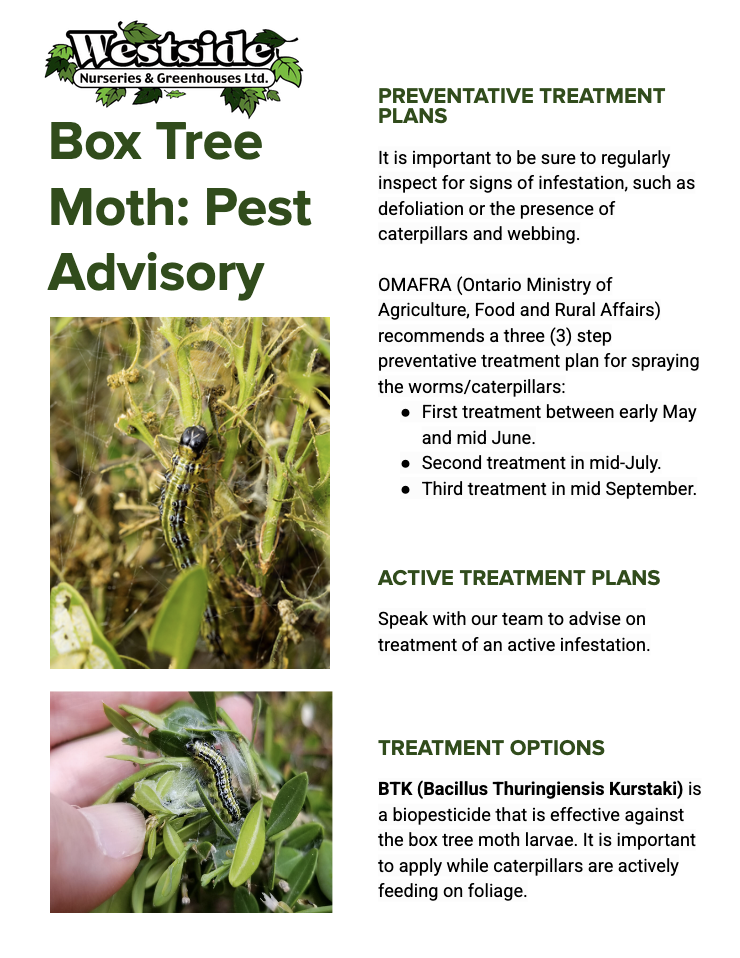
Resource Guides


Frequently Asked Questions
Whether you’re looking for answers to complex garden questions, or looking for guidance with basic gardening needs, we are here to help! From landscape tips and tricks, to gardens, ponds, house plants, and general knowledge, we’ve got you covered. Below are a few of the most common questions we get asked. Don’t see your question below? Give our store a call: (519) 376-6521 or shoot us an email: [email protected]
What Does NPK Mean For Fertilizer?
NPK stands for Nitrogen, Phosphorus, and Potassium. These letters come from the chemical symbols for each element and offer a different benefit depending on their concentrations.
Nitrogen (N): Green growth. Contributes to lush vegetative growth / foliage.
Phosphorus (P): Root development, flowering / blooms, and fruit production.
Potassium (K): Overall health and well-being of the plant.
The numbers on your bag of fertilizer are the percentage of each nutrient. Therefore a bag of 7-14-14 would be 7% Nitrogen, 14% Phosphorus, and 14% Potassium by volume. A smaller quantity with a higher ratio can be the same as a larger quantity with a lower ratio. Meaning, 5lbs of 20-20-20 is the same nutritional value as 10lbs of 10-10-10.
Is Soluable or Granular Fertilizer Better?
Both are great options. The ideal type of fertilizer depends on your needs and the plants you are looking to fertilize. Water soluble fertilizers offer a quicker, more immediate boost of nutrients, but require careful measuring and more frequent application. Granular fertilizers offer a slow, controlled release over a period of 4-6 weeks, depending on the specific product used.
Water solubles can help renew exhausted or deficient plants more quickly, while granulars can help keep your garden thriving all season. There is no right or wrong choice, both types of fertilizer have their purposes and both work well when used correctly.
What Alternatives Can I Use To Replace My Boxwoods?
Yew, globe cedar, and Inkberry holly are some of the more popular choices for boxwood substitutes. When selecting a replacement there are several factors to consider:
- Maintenance: Some alternatives will require more or less pruning, offer deer and disease resistance, or thrive best in specific soil conditions.
- Aesthetic: Not all boxwood alternatives allow for intense, regular pruning or shaping.
- Sizing / Spacing: Some plants may have a larger mature size or come in a dwarf variety.
Dense Yew (Taxus x media ‘Denisformis’): Designed for ornamental use, this evergreen shrub typically grows 3-4 ft tall and 4-6 ft wide. It forms a dense, spreading mound making it ideal for hedges and boarder plantings. Reponds well to pruning, allowing it to be shaped for structured landscape.
Hicks Yew (Taxus x media ‘Hicksii’): A hybrid evergreen shrub with a narrow growth habit. Mature height ranges from 10-15 ft, but can reach up to 20 ft in ideal conditions with a width of 3-5 ft. Popular for large or tall hedges, privacy walls, or windbreaks. Slow growing, and tolerant of pruning.
Globe Cedar (Thuja Occidentalis ‘Woodwardii’): Valued for its dense, globe-shaped growth habit and rich green colour. Cedar grows well in moist conditions with pleanty of sunlight. Slow-growing, it will reach 6 ft tall and wide at maturity, though the Golden Globe Cedar, a dwarf cultivar, will only reach 3-4 ft.
Inkberry Holly (Ilex Glabra): Cultivars like ‘Gem Box’ and ‘Strongbox’ provide a soft, boxwood-like look with dark green leaves and high disease resistance. This variety can be trimmed, like the boxwood, and naturally has a rounded growth habit.
Which Aggregate Should I Use For My Project?
The various aggregate products each offer a specific use. Whether you are looking for a base under a shed, to fill some potholes in the driveway, or divert water from your foundation, be sure to select the right aggragate for your needs.
Utility Gravels:
3/4″ Clear Gravel: Drainage stone. Ideal for use in drainage systems such as a French drain, around pipes, septic fields, and as a backfill around retaining walls. Use it in water-prone areas to ensure proper drainage while providing stability.
5/8″ Crushed Gravel: Stability gravel. Ideal for use in driveways, pathways, backfill, and as a base material under structures. Crushed gravel offers drainage and stability, making it an excellent choice for high-traffic areas and driveways.
Limestone Screenings: Also known as Stone Dust. Ideal as a basematerial in construction and landscape projects. Used to create a level surface under pavers and patios, or in driveways. It is stable and compactable, while still offering some drainage to prevent shifting.
1/4″ HPB Gravel: HPB stands for High Performance Bedding. Designed for the primary purpose as a bedding layer under pavers or structures. It is a self-compacting material that allows for drainage. The small stones lock eachother in place to create a firm, stable layer.
Concrete Sand: Fine material used in mixing concrete or bricklaying and stonework. Spread it over topsoil to increase drainage and level your lawn, or use as a base beneath a pool or pond liner.
Decorative Gravels:
River Rock: 1″-6″ smooth, rounded stones. When used in a garden, river rock supresses weeds, reduces erosion, and allows for drainage without decomposing or fading, making it a desired alternative to natural mulches. Ideal for use in ponds and waterfeatures to give a natural feel to the landscape.
Pea Stone: 1/8″-3/8″ smooth, rounded stones. Used in pathways and patios, pea stone is soft under feet and pets while adding a more decorative look than crushed or clear gravel. Excellent for use in ponds, rivers, wading pools, or natural swimming holes.
Which Soil Should I Use For My Project?
Different soils serve different purposes. The ideal choice will vary depending on whether you are looking to top dress a lawn, fill a raised bed, or enrich the nutrients in your existing garden.
Top Soil: Locally sourced topsoil. Ideal for repairing uneven ground, rough grading, or back filling.
Triple Mix: Nutrient rich soil blend for planting trees & shrubs. Use for flowers and vegetables in gardens and raised beds.
*Gro-Max®: A premium garden soil formulated for optimum root growth and plant health.
*Composted Manure: Ploughman’s Choice Composted Livestock Manure for increasing the nutrients of existing soil. Made from 100% fully-composted manure, this incredibly rich, nutrient-packed soil additive contains no green bin or recyclable materials as filler.
*Disclaimer: This product is made with materials that meet the OCQS (Ontario Compost Quality Standards) guides, however it is not 100% free of foreign matter and on occasion may contain small pieces of plastic and glass. For more information, visit the Ontario Government’s website
Still Have Questions?
We’re Here To Help! Contact Us For More Information and Guidance.